
Who Am I Now? Navigating Life Transitions in Therapy with Phoebe Zerwitz

Who am I and What’s next?
They are questions that may arise during some of the biggest moments of our lives. Maybe you’ve graduated, started a new career, become a parent, retired, moved, ended a relationship, taken on the role of caregiver, or experienced the loss of someone you love. Sometimes the change is something you wanted. Other times, it is something you never expected. Either way, transitions are complicated.
Society often talks about change as a new beginning, a fresh start, or an exciting next chapter. But what we don't always talk about is what we may be grieving at the same time.
A Little About Me:
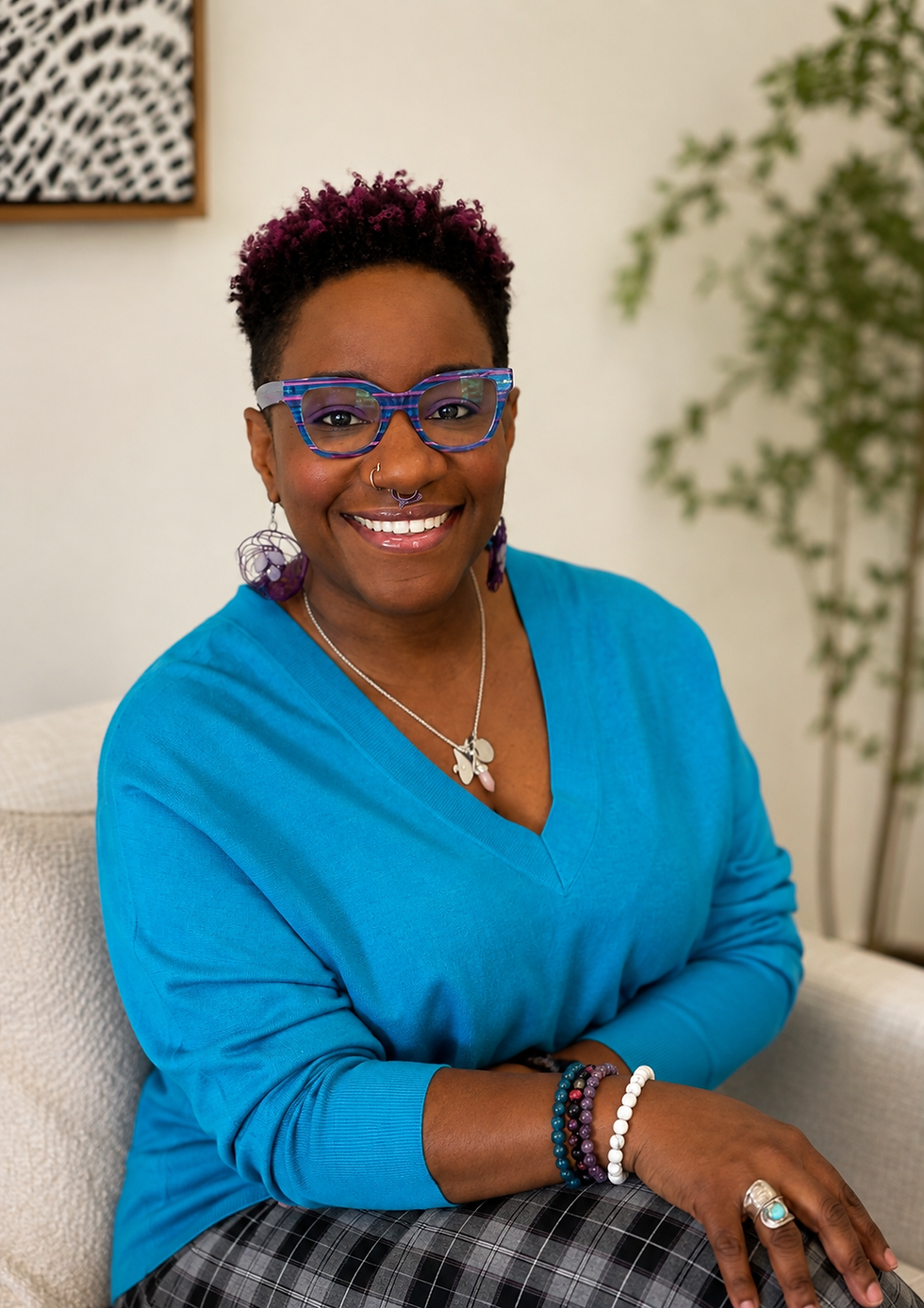
My name is Phoebe Zerwitz, and I’m a Licensed Graduate Professional Counselor and the newest therapist at B’well Counseling Services. I am stoked to be here, writing this blog for you today and to be joining the B’well team!
I earned my Bachelor of Arts in Psychology with a minor in Studio Arts from Loyola University Maryland before completing my master’s degree in Counseling Psychology at Towson University. I work primarily with adolescents, adults, and older adults experiencing anxiety, depression, grief and loss, relationship and family challenges, and major life transitions. My clinical experiences at Carroll County Youth Services Bureau and The Johns Hopkins’ Memory and Alzheimer’s Treatment Center (MATC) at Bayview have provided me the privilege of being able to serve as a support for individuals and families across different stages of life and witness how deeply transitions can affect our sense of identity, relationships, routines, and understanding of what comes next.
My approach is person-centered, strengths-based, trauma-informed, and informed by existential perspectives. With my background in Studio Arts and as a 200-hour certified yoga teacher, I also value creative and experiential ways of exploring our life experiences. When appropriate and/or requested, I may incorporate creativity, mindfulness, grounding, or movement into the therapy space. These experiences have shaped the way I approach therapy. As a Loyola Alum, I’m guided by the Jesuit value and Latin term of cura personalis, or “care for the whole person.” To me, this means looking beyond a person's symptoms and making space for their experiences, relationships, values, strengths, and environment.
And when we look at the whole person, we must make room for grief, both big and small.
When we hear the word “grief,” we often think about losing someone we love. But the experience of grief can accompany many forms of loss, and sometimes life transitions are some of the biggest forms of loss. We can grieve a relationship, a prior career, a familiar routine, our independence, a role that once gave us purpose, or even the future we thought we were going to have. We can also grieve a version of ourselves that no longer feels quite accessible. Grief wears many hats and takes many forms. These feelings aren't contradictory. They can co-exist.
Sometimes we assume that if a transition was our choice, or if society says it is supposed to be a positive thing, that we shouldn't feel sad about it. But wanting something new doesn't mean we won't miss what we're leaving behind. Transitions can bring excitement and uncertainty, relief and sadness, hope and fear. Having complicated feelings doesn't mean something is wrong or that you're not adjusting well. Sometimes it simply suggests that something meaningful has occurred and we may find ourselves asking: Who am I now? What do I want to carry forward? What am I ready to let go of?What still matters to me? What’s next?
And, truthfully, these are questions I have asked myself, too. Perhaps that is part of what makes this work so meaningful to me. I don't approach these questions as someone who has the answers, and I won't pretend to know, because you are the expert of your experience and it is my job to be your copilot, navigating uncertainty, complexity, and growth that comes with being human together.
You don't have to know exactly who you're becoming. You don't have to have the next chapter figured out. And you don't have to leave every part of your old self behind. Perhaps, the process of becoming is about taking what you've learned, honoring what you've lost, reconnecting with what matters, and slowly discovering what comes next. Therapy is a great place to embark on that journey, when it may feel too big to tackle and you just don't know where to start.


Comments