
Meet Dina: Balance, Reunification Therapy and Growth

Video Transcript:
Jake: Welcome back to another Meet the Therapist interview. Today we have Dina Wientge, who’s a licensed clinical social worker and has been with B’well over a year now. I’m blessed, been having fun. So, I am excited to be sitting down with you today and always. To just spend some time talking more about your practice, and how you work, and who you work with, and also maybe just give people an opportunity to learn more about you as a person. So let's launch right in with my favorite question. How would you describe your client Venn diagram? What are the overlapping things that sort of bring people into the work with you?
Dina: First I want to thank you for, you giving me this opportunity, and the past year has been amazing, I’m very grateful to be a part of B’well. I know that’s your favorite question, I find that question challenging. I think I work with people through the lifespan. But thinking about it, I guess I see three circles. The ones I work with, I provide individual therapy working with clients who have depression, anxiety, eating disorders, body image, trauma, grief, life transitions. The other circle I see couples, that would be intimacy, trust, conflict, communication. And I also provide family therapy, so that communication, boundary work, family reunification. I think the intersection would be more on that, people having the courage to reach out for support, looking to change patterns of behaviors, and to have both.
Jake: Yeah, tell me if I'm off but I, I describe you off the people as, whether it's individual whether it's couples whether it's family work it's all about systems and patterns right? And understanding what are the mechanisms that are keeping people stuck and how to change those patterns. That feels like the, that circle.
Dina: Yeah, yeah.
Nia: I think that fits. Yeah, yeah kind of branching off from that, what do you feel like brings people into that now, if there’s anywhere in particular in those areas?
Dina: I think people usually come in because they feel lost. They feel lost with themselves, they need a purpose, conflict in relationships, and looking to change those patterns, looking to, something’s not working in their life and what can they do and how can I help them feel better about themselves. I think people may personally be coming to see me I think because of my experience. Also my personality, and I offer an integrated holistic approach.
Jake: Yeah, you've been doing this for a minute.
Dina: Mhm, yeah.
Jake: Just a couple.
Dina: Just a couple minutes, yeah.
Jake: Yeah I think of, there’s a certain trust that people can have in you. That you’ve probably seen it before right? Which I tell people, yes everyone’s special and unique, and, I’ve seen this before. Which I think gives people a certain sense of comfort of like oh okay, we’re not that broken.
Dina: Absolutely, and normalize it. People don't want to feel like they're the only one experiencing that. So, I think having that experience and being able to share life experiences and how I help people who’ve had similar issues before.
Jake: Probably several people.
Dina: Yes. I have several people, yeah.
Nia: And something about you, I think in that is you know how to connect with each person individually and really bring that individualized therapy and approach and energy that you show up with yourself and the same every day. But really like helping people stick in that room and you know have that space for themselves.
Dina: I mean I think we’re there to facilitate change, so I think you’re (inaudible).
Nia: I do.
Dina: You know trying to show up as my authentic self and bring who I am into the room (inaudible).
Jake: This is the question that, if folks watch any of the other Meet the Therapists interviews, you hear me say if you had answered this question wrong in the interview you wouldn’t be here right now.
Dina: So I must’ve got it right then! See if I can repeat that today!
Jake: And it’s, what's your why? Why are you a therapist? Why have you stayed with this career as long as you have? What is it that is motivating, keeps you engaged in doing this work?
Dina: I think, my whole life I’ve been interested in those patterns of behavior right? I think I’ve always asked a lot of questions, always tried to figure people out. That’s what my family tells me, they’re like you’ve always done that! You always try to get in there and try to understand people’s emotions and behaviors. I think it’s deeply rooted in wanting to facilitate change. And believing that change is possible and that I’m there to guide that change. And having a trusted, safe, therapeutic relationship I think that creates that safety to make those changes. I think it’s a connection with people, I love connecting with people.
Jake: I know this about you.
Dina: So I think that gives me energy and I think that’s what’s helped me stay in this career and field for so long.
Jake: Yeah.
Dina: And now it’s being at B’well where I feel I really have a balance of being able to really use my clinical skills and focus on my clients, and also have time to take care of myself.
Nia: Balance, something we definitely all hold close, yeah.
Dina: I think a lot of the time our clients, there’s something off balance in their life, right? So how do we help them restore balance and peace in their life.
Jake: Yeah. There’s something there you just said about, that parallel process of, maybe part of the why is being in this profession can be challenging and difficult and overwhelming and stressful. It also gives us this sort of charge to do these things in our own lives. Right, and to find this balance, you both know this is something I’m so passionate about. I don't want to be my therapist’s 34th client of the week, cause I know they're just absolutely fried. And to be able to do that and really show up for people makes the work even more meaningful.
Dina: Absolutely.
Nia: Yeah, we gotta practice what we preach.
Dina: Right, right, they try to live it right?
Nia: Yeah.
Dina: And they think, you know, thank you Jake for presenting that, but you created this and help us make sure that we're doing that for ourselves too. So then we can be present for our clients.
Jake: Yeah.
Nia: Mhm, yeah. I'm curious what, in a session, what that looks like for you? If it's individual session, if it’s couples, families, I know you also do reunification sessions. So, in work, I’m wondering what that looks like.
Dina: I think, I’ll start by saying, I think it’s unique in that I try to meet the needs of my clients. How they show up and what they need that day. I would say it's gently structured, warm, compassionate, but I'm also not a therapist who just sits there and kind of nods and, you know, I try to get in there, right. I'm, I see myself as a facilitator of change, so it’s that, right, we’ve been talking about balance a little bit. A balance of pushing and challenging but also being compassionate and understanding. So I think, definitely could be tears, laughter, hard work, but really deep and meaningful.
Nia: I love that “get in there.” I think that’s a great way to describe how you show up Dina. Again, in a like connective way, grounding way, anchoring way I feel. Where you’re gonna be involved, you’re gonna be active, and it’s gonna feel really collaborative.
Dina: Yeah, I think so. That’s what I try to bring. Yeah, I think in there we can practice skills, we might roleplay, we might do some grounding techniques or other skills to build their toolbox.
Jake: Can you tell us what a family session, whether it's reunification, and whether that's formal or just sort of a family unit that’s saying, “Okay the court didn't send us here, we aren't here as part of our divorce or co-parenting agreement or whatever. But we need a tune up. We need some work around changing this pattern.” What would that look like?
Dina: I think, I love family therapy and I love couples. I think for, I think reunification and family therapy, similar but different. I think there’s a different goal and approach. So family therapy, it’s really important to make sure that everybody in the room has a voice. And understanding, you know I think, over time families create, we get labelled in certain roles and certain myths and that becomes real. So I think it’s like looking how people treat each other, communicate, respect each other. And what are like the roles people are serving in the family, and what’s working and what’s not working.
Jake: And then in reunification?
Dina: So reunification, a little bit different. Because in family therapy, I see everyone as my client, my responsibility. In reunification it's usually a child and a disengaged parent, someone they might not have seen in a long time, so the priority would be to create safety for that child. So I feel like my role is to create safety, and try to start having communication about what’s happening, so we get to go slow and gentle. So maybe we play a little game together, and start talking so that the parent and the child can get to know each other again. Usually they haven't seen each other in a year or months and a lot changes in the child's life, so then the focus is, and all my sessions on safety, trust, but in that it’s really important to make sure the child feels safe ‘cause there’s usually been an injury of some sort, why someone in the life has not been involved.
Jake: Sure.
Nia: Right.
Jake: I believe we touched on this a little bit, but what keeps you going now? What is it that keeps you inspired to, you know, keep expanding your work and changing and growing?
Dina: I think one, giving the ability to grow. Right, since I’ve been at B’well for a year I've been able to get some certifications which I've thought about and never really had the time or the support to do that. So I think that keeps me inspired. Learning, making sure that we’re staying up on evidence-based approaches, and that kind of current with what’s happening in the field of psychology. I think being able to witness someone make a change, even like small powerful shifts can be extremely meaningful.
Jake: Yeah.
Nia: Yeah.
Jake: I just, I thought of a uh, something we've talked about before with gardening, where you’ve got to give things enough room in the garden to grow, right, if you overpack everything you're not going to get Dina's famous pumpkins out of her garden.
Dina: And this year I think I got, I nailed it this year!
Jake: It’s gonna be good!
Dina: Yeah it’s looking good, the patch is looking good!
Jake: Right but that’s just as true for our careers, especially as therapists it can be so easy to get stuck into hour after hour after hour of sessions, and then we don't have the energy or the bandwidth to go learn more.
Dina: Right.
Jake: And then we, our skills get dulled, right, they get, we get drained, we're not providing that same level of care. So I mean it's inspiring to me to see, okay I can keep doing this and keep learning, and growing, and changing and that's actually the point of this work is, it’s why we call it a practice right, because you got to keep learning and changing and adapting.
Dina: Absolutely. And I think when you get to a point where you feel like there’s nothing to learn, that leads to burnout. So I think there’s always, you know, we can always make our skills better and refine them and learn new, learn new things.
Nia: Always. Yeah, yeah what challenges have you faced? You know, being a therapist, being in this practice. If it's over the years or if it's recently just what, yeah.
Dina: I think one thing, probably like many in our field, is to be able to hold space for others while taking care of yourself. Right so going back at the beginning, like that balance of giving to others, and then you can show that you have enough, recharge to be able to take care of yourself. I think that, I think through the years probably trying to find a place that has that balance, you know what I mean? So I think I landed here, right! I think being able to focus on the work that I want to do.
Nia: Yeah.
Jake: What else should people know about you? Whether that’s potential clients, other providers that might want to refer to you, people that want to learn from you. What else is worth sharing?
Dina: I think, that I’m passionate about this work. You know I think I have certain energy that I bring. We all have energy that we bring, so I think the energy that I have to really get in there right, we talked about getting in there right and making a difference. I think, in some of my expertise that I’ve worked with and have spent many years studying and training for. I’m down to earth! And also I’m not everyone’s cup of tea right, everyone likes certain people and I think, you know I’m the intake coordinator, so if it’s not me I’m happy to help anybody, they can call and I’ll get them matched up with one of our amazing therapists here.
Nia: Yeah.
Jake: Yeah. I’ll tell this story briefly that when, I remember it was a Friday in March of last year, 2024, and I'll be very, very honest. I had briefly glanced over your resume before you came in. I wish I could say I sat there and studied and prepared, but-
Dina: You seemed prepared, so that’s good to know!
Jake: I, I just remember being floored after I met you. Just being like, oh my gosh
Nia: Yeah.
Jake: Where did she come from? And how did I not know this person? There there was just this immediate sense of a fit, and this sort of thing clicked where, and you know I didn't pay you to say how wonderful it is to work here and you didn't pay me to say how wonderful it is. And it was just genuine, that I remember when you left we all looked at each other and were like, yes! How did we make this happen, because we didn’t realize that we had a Dina shaped hole in the practice, and you just sort of walked right into it and it was, it just all clicked, it felt so good and since then it’s felt so natural, so (Dina: Yeah, absolutely) wonderful.
Dina: No I think I felt the same right, that’s why I’m here. I think that, I felt that you were truly authentic and would give me the space to grow and support. (Nia: It’s been a pleasure) You’ve both have been amazing and supportive and I appreciate both of you so much.
Nia: Likewise.
Jake: What a love fest!
Dina: I know! But I think people feel that too (Jake: Yeah), you know I think when you walk in (Nia: Yes) here you feel this energy and the calmness of this positive environment.
Jake: Yeah, what do I say all the time? I want folks to come in here and feel massively comfortable before we get massively uncomfortable.
Dina: Right, right right! I like that Jake, that’s a good one.
Nia: Yes, I think that’s one of our slogans here, (Jake: It’s becoming one) just in our office.
Jake: So thanks for sitting down with us Dina!
Dina: Of course, anytime! Thank you for having me.
Jake: It’s a pleasure. We’ll of course have all of your contact information on how people can reach out and work with you, or learn from you, or refer to you, and so on and so on and so on. So get on Dina's schedule while you can because it always fills up and you have to catch her in these windows where she might have some space. So thank you!
Dina: Thank you!
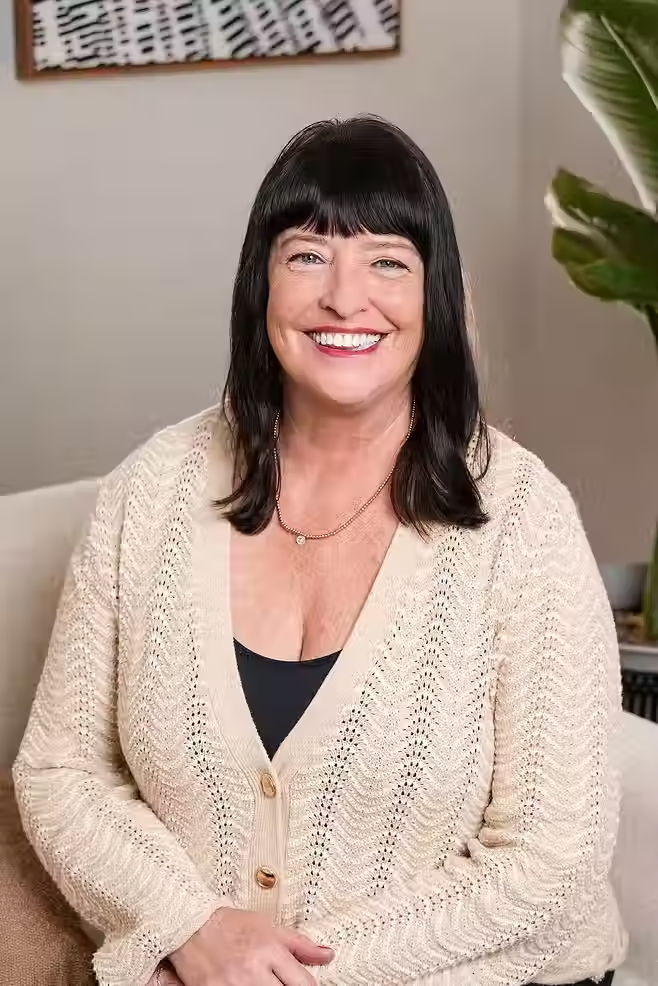
Dina Wientge works with a wide range of individuals, including preteens, adolescents, adults, couples, and families. Blending evidence-based therapies with a person-centered, collaborative, and individualized approach, Dina supports those facing anxiety, depression, eating disorders, grief, life transitions, and caregiving for aging parents. Navigate to our website to learn more about Dina, her approach to therapy, and reunification therapy. To schedule a 15 minute consult with Nikki to see if she's a good fit, click this link.


Comments